
Wisconsin-based c-store Kwik Trip understood that as they looked to invest in some substantial technology initiatives in 2025, and the decisions they made brought about many operational achievements and a significant return on investment.
Let’s look at what Kwik Trip did:
All-In on Omnia
Kwik Trip’s first decision was to conduct a network-wide shift from Secure System on Module (SSoM) boards to Omnia boards inside their Encore® dispensers.
That decision required a strong investment, but it was one that Kwik Trip’s leadership team felt was necessary to achieve their goals.
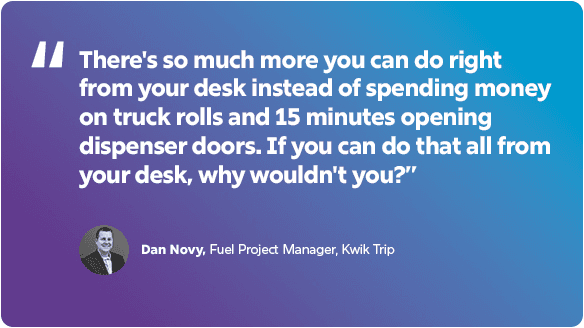
That shift had an instant impact, as it enabled remote access to each dispenser since the Omnia board creates a Local Area Network (LAN) within the dispenser. As Dan Novy puts it, Kwik Trip was now saving time and money by being able to tackle so many things “right from your desk.”
It also impacted their forecourt media. The dispenser media client runs on the Omnia as well, meaning Kwik Trip could adopt a cloud-based media approach that has helped ensure that nearly 99% of their fueling positions are playing the intended media at any given time.
Transforming Dispenser Management
With a remote connection to their dispensers established and a cloud-based media approach set up, Kwik Trip’s next step was to add PCN5 (Pump Control Node 5).
This allowed them to fully configure their dispenser settings remotely.
In the past, they would’ve needed to have someone on site manually configuring 200 values to the PCN at dispenser startup. Now, they simply push a configuration file, and they’re good to go – helping reduce inconsistencies and minimize the risk of human error.
Decreasing Truck Rolls
Kwik Trip had observed other retailers remotely resolving dispenser issues. By adding PCN5, they were able to do the same, as it enabled them to connect their dispensers to Forecourt (Insite360).
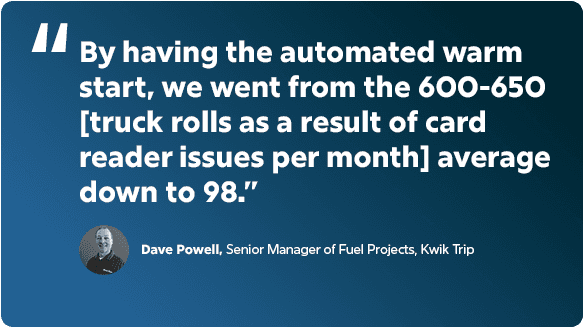
Arguably the biggest boost that Forecourt brought Kwik Trip came in the form of the Warm Start API. They’re now seeing 80-85% success through automated warm start corrections on card reader issues.
Considering that the average truck roll costs between $350-$450, they’ve taken service costs as a result of card reader issues from well over $200,000 per month down to well under $50,000!
That’s made things a lot more efficient for Kwik Trip’s service techs, which is crucial since they handle more of their service issues in-house. The Warm Start API allows them to focus on their sites that truly require on-site support.