




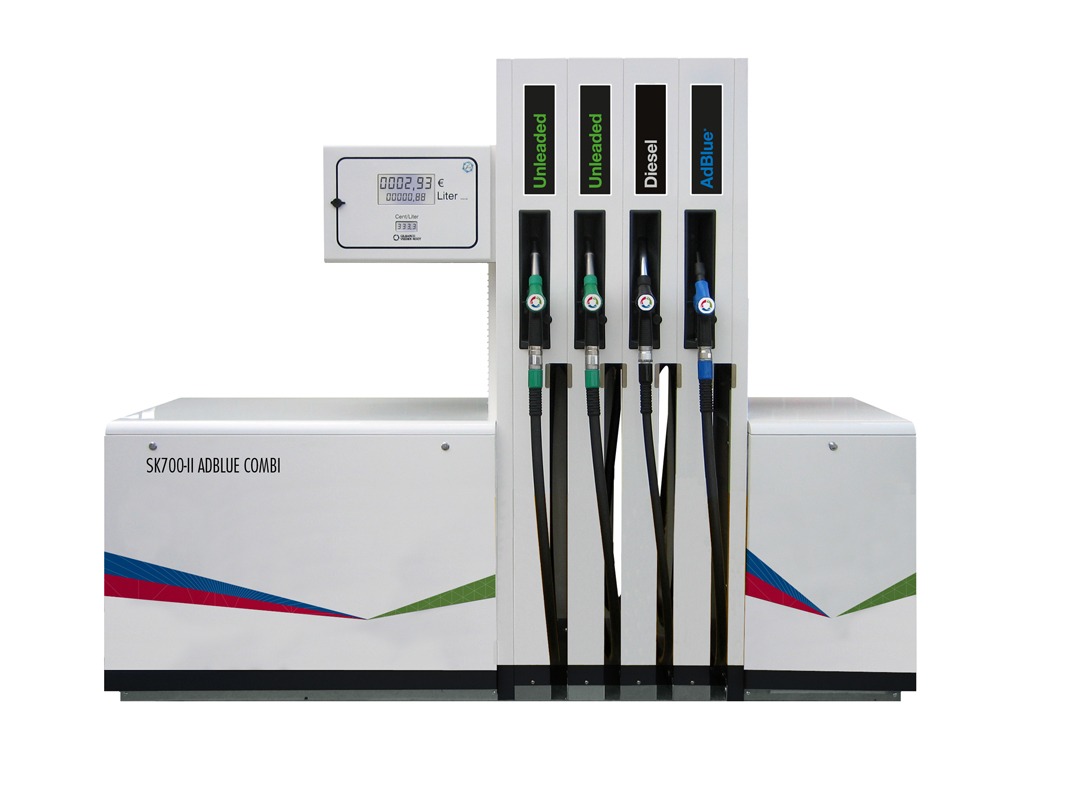
SK700-II AdBlue for Cars

Proud to be Powered by Vontier. Sharing a united vision that is driven by innovation. Find out more

SK700-II AdBlue for Cars

Following the success of AdBlue for the commercial trucking industry, the use of AdBlue in private vehicles is expected to rise with the German Car Manufacturers Association (VDA) predicting that by 2020 there will be around 23 million Selective Catalytic Reduction (SCR) equipped cars using AdBlue technology for clean emissions.

There are a number of reasons for this predicted increase, particularly the requirement for car manufacturers to meet stringent European emission targets and the Euro VI standards due to be introduced from September 2014.

This ATEX approved dispenser comes as a standalone or a multi-product dispenser with the possibility to integrate a 1,100 litre AdBlue tank. The AdBlue for Cars dispenser can be integrated onto the forecourt, allowing AdBlue dispensing to become more accessible as customers fill both Diesel and AdBlue from the same filling position, while eliminating the need to stock and dispose of AdBlue bottles, making dispensing more environmentally friendly.

The AdBlue for Cars dispenser demonstrates Gilbarco Veeder-Root’s commitment to introducing environmentally friendly fuels at the forecourt.

To find out more about AdBlue for Cars and Multi product dispensers, check out our latest blog.

Fail safe

The pressure delivery system avoids crystallisation, the dispenser hydraulics are corrosion proof, while automatic heating and a smart door prevents freezing. The SK700-II AdBlue for Cars ensures maximum uptime and damage free filling.

Versatile

The SK700-II AdBlue for Cars is also available in ATEX version and will fit seamlessly with the rest of the solutions and systems on your forecourt allowing easy retrofits to existing regular fuels combis. Choose from Standalone, Combi or Integrated configuration and options to build the right AdBlue filling solution for your forecourt.

Design matters

AdBlue can crystalise or freeze at -11°C. The SK700-II AdBlue for Cars dispenser is equipped with an integrated heated hose solution to maintain ambient temperatures without use of heavy doors and covers. It incorporates a corrosion proof electromagnetic flow meter, which is highly advanced in the industry. It has no moving parts and no drifts to ensure it will not block and maximises uptime, while providing very accurate measurement, eliminating product loss. 

Proven

The SK700-II AdBlue for Cars installations have continuously performed in Finland at temperatures as low as -25°c, especially important as AdBlue freezes at -11°c.

Temperature operating range -25°C to +40°C (-40°C option)
AdBlue dispensing 4 to 10 litres/min
Metering technology Electromagnetic flow meter
Built in heaters Heated hose and ATEX heaters
Heaters power consumption 0 - 500 watts/hr  
Communication protocol options As per standard SK700-II


Request a Quote


<script>

// CONFIG: map UTM parameter names -> input selectors
const fieldMap = {
utm_source: 'input[name="1097612_221968pi_1097612_221968"]',
utm_medium: 'input[name="1097612_221965pi_1097612_221965"]',
utm_campaign: 'input[name="1097612_221959pi_1097612_221959"]',
utm_content: 'input[name="1097612_221962pi_1097612_221962"]'
};

// CONFIG: whether to save values read from the URL into sessionStorage
const saveUrlToSession = true;

function safeSessionGet(key) {
try {
return sessionStorage.getItem(key);
} catch (e) {
return null;
}
}

function safeSessionSet(key, value) {
if (!saveUrlToSession) return;
try {
sessionStorage.setItem(key, value);
} catch (e) {
// ignore storage write failures
}
}

function getUrlParam(paramName) {
const urlParams = new URLSearchParams(window.location.search);
return urlParams.get(paramName); // returns null if not present
}

function setFieldValue(el, value) {
if (!el) return;
el.value = value;
// trigger input/change events for libraries that listen for them
el.dispatchEvent(new Event('input', { bubbles: true }));
el.dispatchEvent(new Event('change', { bubbles: true }));
}

function populateKey(paramName, selector) {
const el = document.querySelector(selector);

// 1) Try sessionStorage first
const sessVal = safeSessionGet(paramName);
if (sessVal !== null && sessVal !== '') {
setFieldValue(el, sessVal);
return;
}

// 2) Fallback to URL param
const urlVal = getUrlParam(paramName);
if (urlVal !== null && urlVal !== '') {
setFieldValue(el, urlVal);
safeSessionSet(paramName, urlVal); // store for future pages if enabled
}
}

function populateHiddenFields() {
Object.keys(fieldMap).forEach(paramName => {
populateKey(paramName, fieldMap[paramName]);
});
}

if (document.readyState === 'loading') {
document.addEventListener('DOMContentLoaded', populateHiddenFields);
} else {
populateHiddenFields();
}

// Optional: allow manual calls from other scripts
window.populateHiddenFields = populateHiddenFields;

(function () {
// CONFIG
const fieldMap = {
utm_source: 'input[name="1097612_221968pi_1097612_221968"]',
utm_medium: 'input[name="1097612_221965pi_1097612_221965"]',
utm_campaign: 'input[name="1097612_221959pi_1097612_221959"]',
utm_content: 'input[name="1097612_221962pi_1097612_221962"]'
};
const saveUrlToSession = true;

// Safe session helpers
function safeSessionGet(key) {
try { return sessionStorage.getItem(key); } catch (e) { return null; }
}
function safeSessionSet(key, value) {
if (!saveUrlToSession) return;
try { sessionStorage.setItem(key, value); } catch (e) {}
}

// URL helper
function getUrlParam(paramName) {
const urlParams = new URLSearchParams(window.location.search);
return urlParams.get(paramName);
}

// DOM helper
function setFieldValue(el, value) {
if (!el) return;
el.value = value;
el.dispatchEvent(new Event('input', { bubbles: true }));
el.dispatchEvent(new Event('change', { bubbles: true }));
}

// Core: check session first, then URL
function populateKey(paramName, selector) {
const el = document.querySelector(selector);
const sessVal = safeSessionGet(paramName);
if (sessVal !== null && sessVal !== '') {
setFieldValue(el, sessVal);
return;
}
const urlVal = getUrlParam(paramName);
if (urlVal !== null && urlVal !== '') {
setFieldValue(el, urlVal);
safeSessionSet(paramName, urlVal);
}
}

// Populate all configured fields
function populateHiddenFields() {
Object.keys(fieldMap).forEach(paramName => {
populateKey(paramName, fieldMap[paramName]);
});
}

// Init
if (document.readyState === 'loading') {
document.addEventListener('DOMContentLoaded', populateHiddenFields);
} else {
populateHiddenFields();
}
window.populateHiddenFields = populateHiddenFields;
})();
</script>

<script>
document.addEventListener('DOMContentLoaded', function() {
// Function to get URL parameters
function getUrlParam(paramName) {
const urlParams = new URLSearchParams(window.location.search);
return urlParams.get(paramName);
}

// Get the utm_source value
const utmSource = getUrlParam('utm_source');
const utmMedium = getUrlParam('utm_medium'); // Also get others
const utmCampaign = getUrlParam('utm_campaign');
const utmContent = getUrlParam('utm_content');

// --- Method 1: Direct Assignment (if form fields exist) ---
// Find your form fields by name/ID and set their value
const sourceField = document.querySelector('input[name="1097612_221968pi_1097612_221968"]'); // Adjust selector
if (sourceField && utmSource) {
sourceField.value = utmSource;
}
const mediumField = document.querySelector('input[name="1097612_221965pi_1097612_221965"]'); // Adjust selector
if (mediumField && utmMedium) {
mediumField.value = utmMedium;
}
const campaignField = document.querySelector('input[name="1097612_221959pi_1097612_221959"]'); // Adjust selector
if (campaignField && utmCampaign) {
campaignField.value = utmCampaign;
}
const contentField = document.querySelector('input[name="1097612_221962pi_1097612_221962"]'); // Adjust selector
if (contentField && utmContent) {
contentField.value = utmContent;
}
// Repeat for medium, campaign, etc.

// --- Method 2: Store in Session Storage (Recommended for multi-page) ---
// This keeps data across page views before form submission
if (utmSource) {
sessionStorage.setItem('utm_source', utmSource);
}
if (utmMedium) {
sessionStorage.setItem('utm_medium', utmMedium);
}
if (utmCampaign) {
sessionStorage.setItem('utm_campaign', utmCampaign);
}
if (utmContent) {
sessionStorage.setItem('utm_content', utmContent);
}
});

// Function to populate form on any page load (using session storage)
function populateHiddenFields() {
const utm_source = sessionStorage.getItem('utm_source');
const utm_medium = sessionStorage.getItem('utm_medium');
const utm_campaign = sessionStorage.getItem('utm_campaign');
const utm_content = sessionStorage.getItem('utm_content');

const sourceInput = document.querySelector('input[name="1097612_221968pi_1097612_221968"]');
if (sourceInput && utm_source) {
sourceInput.value = utm_source;
}
const mediumInput = document.querySelector('input[name="1097612_221965pi_1097612_221965"]');
if (mediumInput && utm_medium) {
mediumInput.value = utm_medium;
}
const campaignInput = document.querySelector('input[name="1097612_221959pi_1097612_221959"]');
if (campaignInput && utm_campaign) {
campaignInput.value = utm_campaign;
}
const contentInput = document.querySelector('input[name="1097612_221962pi_1097612_221962"]');
if (contentInput && utm_content) {
contentInput.value = utm_content;
}
}

// Run this when the form loads on the *final* page (e.g., the form page itself)
// Call populateHiddenFields(); when your form element is ready or on DOMContentLoaded again.
</script>