




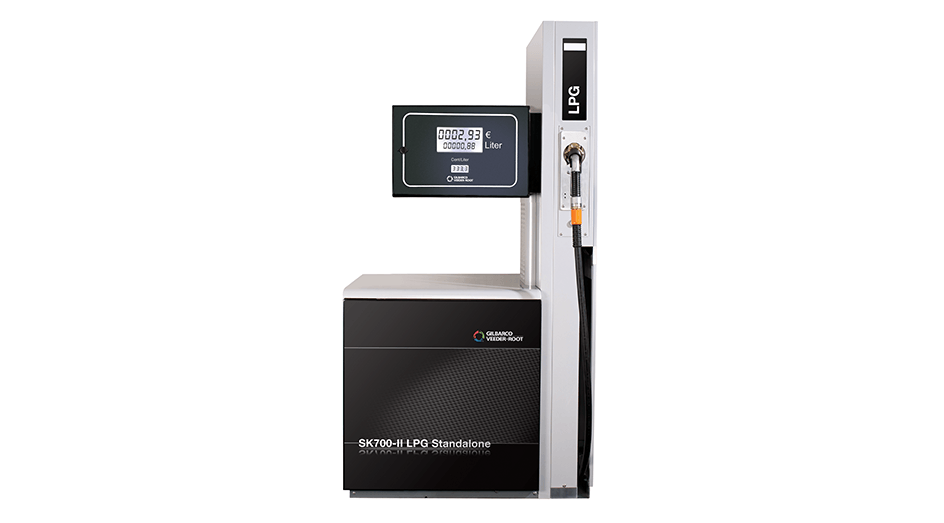
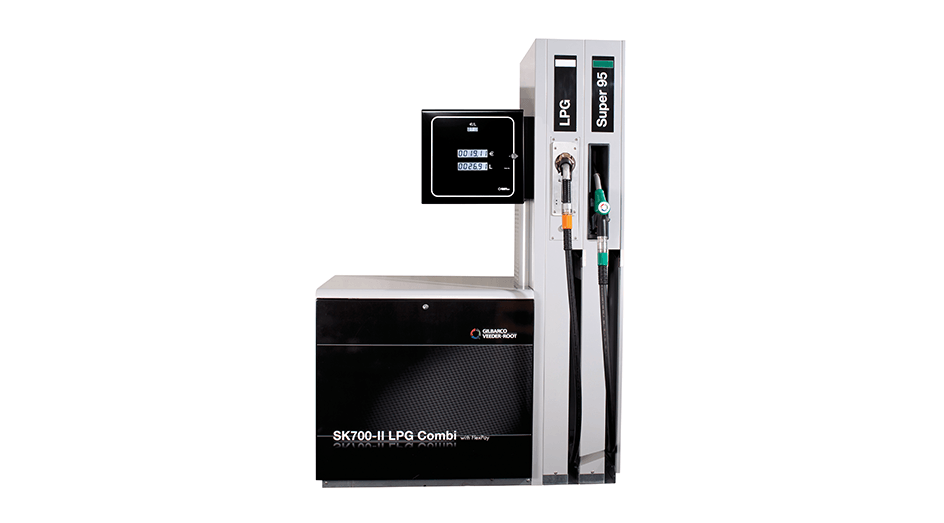
LPG Pump | Fuel Dispenser SK700-II

Proud to be Powered by Vontier. Sharing a united vision that is driven by innovation. Find out more

Liquefied Petroleum Gas (LPG) is the most widely used alternative to petrol and diesel in Europe. As demand increases for greener fuel at an affordable price, more and more fuel retailers are taking the decision to offer LPG refuelling. It can be expected that LPG will only increase in popularity with the focus on greener fuels.

With a full range of LPG dispensers available, fuel retailers can mix and match models and configurations, while maintaining a uniform image across all alternative and conventional fuel dispensers. In addition, with the SK700-II Combi, it is possible to deliver LPG alongside other fuel grades from the same dispensers.

The range comprises LPG dispensers for both island and lane oriented fuelling, with standalone and combi versions available to suit all customer needs.

All dispensers in the SK700-II LPG range are ATEX and MID approved as well as being tested and sealed at Gilbarco Veeder-Root’s own facility before shipment. This ensures that when the dispenser arrives at the forecourt it is approved and ready to use.

Other LPG products from Gilbarco Veeder-Root include Red Jacket Premier LPG submersible pumps, TLS LPG tank gauging and FlexPay™ payment which can be combined with the SK700-II LPG dispensers in a seamless system.

Safe and Serviceable LPG Hydraulics
Reliability and safety remain uncompromised with Gilbarco Veeder-Root’s field proven LPG hydraulics design with electronic meter calibration, highest quality LPG breakaway couplings, hoses and nozzles.

Superior Internal Hose Management
The only LPG dispenser on the market that comes with internal hose management with retraction as standard. This ensures an improved look, better hose handling and longer hose lifetime. An external hose with retraction is also available as an option.

Highest Quality Construction
Built with the highest quality, zinc coated sheet metal for an improved, rust free look that guarantees a longer and damage free life. Stainless steel execution is also available as an option.

Rigorous In House Testing and MID Sealing
Thorough tests, including pressure testing at Gilbarco Veeder-Root’s manufacturing facility in Germany, guarantee highest quality and safety, ensuring peace of mind and low lifetime costs.

Each SK700-II LPG dispenser comes complete with MID factory certification and sealing, so it is easier and cheaper to install on site.

SK700-II Flexibility and End User Experience
The SK700-II LPG is one of the many modular designs available with the SK700-II series, so it fits seamlessly with the rest of the systems and solutions on your forecourt.

It provides for a range of options, such as Automatic Temperature Compensation (ATC), emergency stop button and preset keypad.

Hydraulics


  • LPG Hydraulics with 1 or 2 meters
  • Electronic meter calibration
  • Break away coupling - Elaflex
Electronics


  • Pulser
  • Calculator
  • LCD Display(back lit)
  • Dead mans push button
Mechanical


  • Housing – painted steel
  • Frame – hot galvanized sheet metal
  • SK700-II Hose Management internal hose connection CR
  • SK700-II IOD Hose Management: external hose with retriever and hose hook
  • LPG nozzle M - T3 OPW
  • Hose M - Elaflex
Technical Characteristics and Performance


Environmental


  • Climate: marine, tropical, industrial, polar
  • Ambient temperature range: -40°C to +50°C
Meter Characteristics


  • Displacement: 0,500 l
  • Maximum flow rate: 50 l/min
  • Minimum flow rate: 6 l/min
  • Accuracy within the flow range: +/- 1%
  • Maximum service pressure (operating pressure): 25 bar
Electrical
  • 230 V + 10% -5% 50 Hz


Request a Quote


<script>

// CONFIG: map UTM parameter names -> input selectors
const fieldMap = {
utm_source: 'input[name="1097612_221968pi_1097612_221968"]',
utm_medium: 'input[name="1097612_221965pi_1097612_221965"]',
utm_campaign: 'input[name="1097612_221959pi_1097612_221959"]',
utm_content: 'input[name="1097612_221962pi_1097612_221962"]'
};

// CONFIG: whether to save values read from the URL into sessionStorage
const saveUrlToSession = true;

function safeSessionGet(key) {
try {
return sessionStorage.getItem(key);
} catch (e) {
return null;
}
}

function safeSessionSet(key, value) {
if (!saveUrlToSession) return;
try {
sessionStorage.setItem(key, value);
} catch (e) {
// ignore storage write failures
}
}

function getUrlParam(paramName) {
const urlParams = new URLSearchParams(window.location.search);
return urlParams.get(paramName); // returns null if not present
}

function setFieldValue(el, value) {
if (!el) return;
el.value = value;
// trigger input/change events for libraries that listen for them
el.dispatchEvent(new Event('input', { bubbles: true }));
el.dispatchEvent(new Event('change', { bubbles: true }));
}

function populateKey(paramName, selector) {
const el = document.querySelector(selector);

// 1) Try sessionStorage first
const sessVal = safeSessionGet(paramName);
if (sessVal !== null && sessVal !== '') {
setFieldValue(el, sessVal);
return;
}

// 2) Fallback to URL param
const urlVal = getUrlParam(paramName);
if (urlVal !== null && urlVal !== '') {
setFieldValue(el, urlVal);
safeSessionSet(paramName, urlVal); // store for future pages if enabled
}
}

function populateHiddenFields() {
Object.keys(fieldMap).forEach(paramName => {
populateKey(paramName, fieldMap[paramName]);
});
}

if (document.readyState === 'loading') {
document.addEventListener('DOMContentLoaded', populateHiddenFields);
} else {
populateHiddenFields();
}

// Optional: allow manual calls from other scripts
window.populateHiddenFields = populateHiddenFields;

(function () {
// CONFIG
const fieldMap = {
utm_source: 'input[name="1097612_221968pi_1097612_221968"]',
utm_medium: 'input[name="1097612_221965pi_1097612_221965"]',
utm_campaign: 'input[name="1097612_221959pi_1097612_221959"]',
utm_content: 'input[name="1097612_221962pi_1097612_221962"]'
};
const saveUrlToSession = true;

// Safe session helpers
function safeSessionGet(key) {
try { return sessionStorage.getItem(key); } catch (e) { return null; }
}
function safeSessionSet(key, value) {
if (!saveUrlToSession) return;
try { sessionStorage.setItem(key, value); } catch (e) {}
}

// URL helper
function getUrlParam(paramName) {
const urlParams = new URLSearchParams(window.location.search);
return urlParams.get(paramName);
}

// DOM helper
function setFieldValue(el, value) {
if (!el) return;
el.value = value;
el.dispatchEvent(new Event('input', { bubbles: true }));
el.dispatchEvent(new Event('change', { bubbles: true }));
}

// Core: check session first, then URL
function populateKey(paramName, selector) {
const el = document.querySelector(selector);
const sessVal = safeSessionGet(paramName);
if (sessVal !== null && sessVal !== '') {
setFieldValue(el, sessVal);
return;
}
const urlVal = getUrlParam(paramName);
if (urlVal !== null && urlVal !== '') {
setFieldValue(el, urlVal);
safeSessionSet(paramName, urlVal);
}
}

// Populate all configured fields
function populateHiddenFields() {
Object.keys(fieldMap).forEach(paramName => {
populateKey(paramName, fieldMap[paramName]);
});
}

// Init
if (document.readyState === 'loading') {
document.addEventListener('DOMContentLoaded', populateHiddenFields);
} else {
populateHiddenFields();
}
window.populateHiddenFields = populateHiddenFields;
})();
</script>

<script>
document.addEventListener('DOMContentLoaded', function() {
// Function to get URL parameters
function getUrlParam(paramName) {
const urlParams = new URLSearchParams(window.location.search);
return urlParams.get(paramName);
}

// Get the utm_source value
const utmSource = getUrlParam('utm_source');
const utmMedium = getUrlParam('utm_medium'); // Also get others
const utmCampaign = getUrlParam('utm_campaign');
const utmContent = getUrlParam('utm_content');

// --- Method 1: Direct Assignment (if form fields exist) ---
// Find your form fields by name/ID and set their value
const sourceField = document.querySelector('input[name="1097612_221968pi_1097612_221968"]'); // Adjust selector
if (sourceField && utmSource) {
sourceField.value = utmSource;
}
const mediumField = document.querySelector('input[name="1097612_221965pi_1097612_221965"]'); // Adjust selector
if (mediumField && utmMedium) {
mediumField.value = utmMedium;
}
const campaignField = document.querySelector('input[name="1097612_221959pi_1097612_221959"]'); // Adjust selector
if (campaignField && utmCampaign) {
campaignField.value = utmCampaign;
}
const contentField = document.querySelector('input[name="1097612_221962pi_1097612_221962"]'); // Adjust selector
if (contentField && utmContent) {
contentField.value = utmContent;
}
// Repeat for medium, campaign, etc.

// --- Method 2: Store in Session Storage (Recommended for multi-page) ---
// This keeps data across page views before form submission
if (utmSource) {
sessionStorage.setItem('utm_source', utmSource);
}
if (utmMedium) {
sessionStorage.setItem('utm_medium', utmMedium);
}
if (utmCampaign) {
sessionStorage.setItem('utm_campaign', utmCampaign);
}
if (utmContent) {
sessionStorage.setItem('utm_content', utmContent);
}
});

// Function to populate form on any page load (using session storage)
function populateHiddenFields() {
const utm_source = sessionStorage.getItem('utm_source');
const utm_medium = sessionStorage.getItem('utm_medium');
const utm_campaign = sessionStorage.getItem('utm_campaign');
const utm_content = sessionStorage.getItem('utm_content');

const sourceInput = document.querySelector('input[name="1097612_221968pi_1097612_221968"]');
if (sourceInput && utm_source) {
sourceInput.value = utm_source;
}
const mediumInput = document.querySelector('input[name="1097612_221965pi_1097612_221965"]');
if (mediumInput && utm_medium) {
mediumInput.value = utm_medium;
}
const campaignInput = document.querySelector('input[name="1097612_221959pi_1097612_221959"]');
if (campaignInput && utm_campaign) {
campaignInput.value = utm_campaign;
}
const contentInput = document.querySelector('input[name="1097612_221962pi_1097612_221962"]');
if (contentInput && utm_content) {
contentInput.value = utm_content;
}
}

// Run this when the form loads on the *final* page (e.g., the form page itself)
// Call populateHiddenFields(); when your form element is ready or on DOMContentLoaded again.
</script>