




What it takes to make EV charging work at scale in Europe
EV charging has moved from rollout to responsibility
Across Europe, EV charging is no longer about proving the concept. Many fuel retailers already operate chargers across their estates, and some are now reviewing first-generation deployments as equipment ages or expansion plans accelerate.
Charging has shifted from rollout to responsibility. Whether deploying your first site or reassessing an existing network, the structure you choose now will determine how easily charging scales.
Early decisions were about site viability, power capacity and funding. As networks mature, the focus changes. Charging must perform consistently, integrate cleanly into operations and support disciplined growth over time.
What often becomes visible at this stage is not a hardware limitation, but a structural one. The way charging was assembled in its early phase can determine how manageable it is at scale.
Easy: Reducing friction before it compounds
Fuel retail is already operationally precise. Introducing EV charging should strengthen that discipline, not dilute it.
As networks grow, retailers begin to see where coordination effort increases, where reporting logic differs between systems and where service structures require additional oversight. These are not failures; they are signals that the operating model deserves attention.
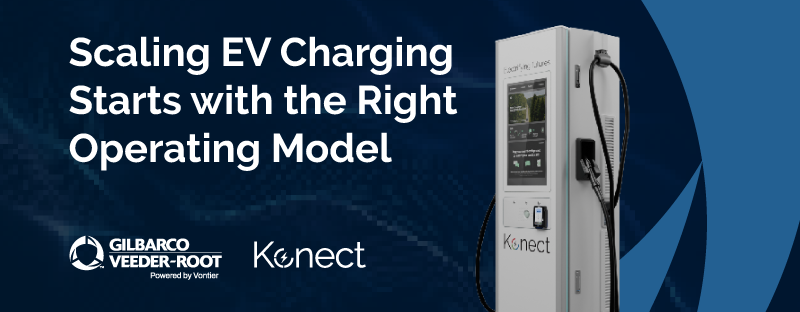
Konect was designed with this evolution in mind. Hardware, managed software and service support are structured within a single operating framework so that expansion or replacement does not introduce new layers of governance. Instead of asking teams to coordinate across separate platforms, the ecosystem aligns monitoring, payments and support within one consistent structure.
“Easy” at scale means predictable oversight. It means that each additional site reinforces the model rather than complicating it.
Seamless: Uptime is organisational, not technical
In mature European markets, reliability is assumed. Charging performance reflects directly on the site and the brand, particularly as utilisation grows.
Uptime therefore depends less on peak power ratings and more on how clearly the network is organised. Monitoring, service governance and accountability must function as one system if performance is to remain consistent across the estate.
This is where many first-generation deployments reveal their limits. When hardware, software and service are structured separately, resolution paths and performance visibility can fragment under scale.
Konect approaches uptime as a system outcome. Integrated monitoring, coordinated service structures and managed operational support provide a single view of network performance and a clear path to resolution. Charging operates as part of the broader forecourt environment rather than as an adjacent system.
Seamless charging is confidence in how the network behaves under real operating conditions.
Profitable: Protecting margin through design
As networks mature, profitability becomes more dependent on operating discipline than on installation speed. Revenue per session matters, but so does the effort required to sustain performance across the estate.
Replacement cycles present an opportunity. They allow retailers to reconsider not only equipment specification, but the architecture supporting it. Aligning charging within a unified operating model reduces structural inefficiencies and supports more controlled expansion.
Konect combines hardware, managed software and scalable service infrastructure within one ecosystem designed specifically for fuel retail. This alignment helps protect margin as utilisation increases and estates grow.
ROI is not created at installation; it is protected in operations. Profitability reflects confidence that the operating model can absorb scale without eroding efficiency.
Charging that fits the European forecourt
European forecourts are evolving into multi-energy destinations where fuel, EV charging and convenience retail must operate together without increasing operational strain.
Konect is Gilbarco Veeder-Root’s integrated EV charging ecosystem for fuel and convenience retail, built on decades of forecourt infrastructure and service expertise. By aligning hardware, software and support within one operating framework, it enables charging to fit the business rather than sit beside it.
At scale, infrastructure performance reflects operational design.
Is your charging model ready for its next phase?
As EV charging becomes permanent infrastructure, the relevant question is not only which charger to deploy next, but whether the structure behind it supports consistent performance and long-term margin.
The EV Charging Evaluation Resource Centre provides practical tools and guidance to help European fuel retailers assess scalability, replacement strategy and operational alignment.